We are sometimes asked why we don’t offer yoga bolsters filled with spelt husks or cotton. We can answer that very quickly: because we are convinced by this natural fibre in every respect, and we wouldn’t want to practise with any yoga bolster filled with anything else. What’s more, there are many other reasons in favour of using kapok. What are they? You’ll find out in this post.
Where kapok comes from
Kapok comes from the fruit capsules of the kapok tree (Ceiba pentandra), an imposing tree native to tropical America and now mainly cultivated in Asia. The tree can grow up to 50 metres tall and, as it ages, develops a wide, umbrella-shaped crown. Inside its leathery fruit capsules, which are around 15 to 20 cm long, the seeds are embedded in fine, silky-soft fibres – it is precisely these fibres that we know as kapok and use in our bolsters.
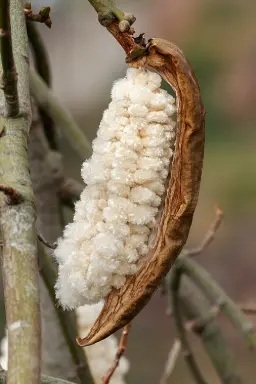
Harvesting is done by hand: the ripe fruit capsules are picked, opened and dried in the sun before the fibres are separated from the seeds. No chemical treatment or washing is required afterwards – the fibre goes straight on to further processing as it is. A single tree can produce up to 20 kilograms a year.
What makes kapok such a distinctive material
Kapok is one of the lightest plant fibres in existence. This is due to the tiny air pockets within each individual fibre, which trap a great deal of air – making kapok not only particularly light, but also breathable. In addition, the fibre has a natural waxy coating. This makes it water-repellent and ensures that it does not clump or felt. For this reason, it was traditionally used to fill life jackets and lifebuoys.
Two things we think are really cool: kapok grows wild. That means no monoculture and no plantation farming – and therefore no pesticides or insecticides. The latter are also unnecessary because the fibre is naturally pest-resistant and therefore does not provide a breeding ground for moths and other pests.
Kapok compared to other bolster fillings
Apart from kapok, there are two other main filling materials used for yoga bolsters: spelt husks and pure cotton. Both have their merits, but when compared side by side, it quickly becomes clear why we opted for kapok. Spelt husks rustle with every movement – which can quickly become distracting, particularly during a calm, restorative practice. What’s more, we simply don’t find them as comfortable. A pure cotton filling, on the other hand, tends to compress too much over time and lose its shape. Kapok is significantly more dimensionally stable and retains its supportive properties even after prolonged use.
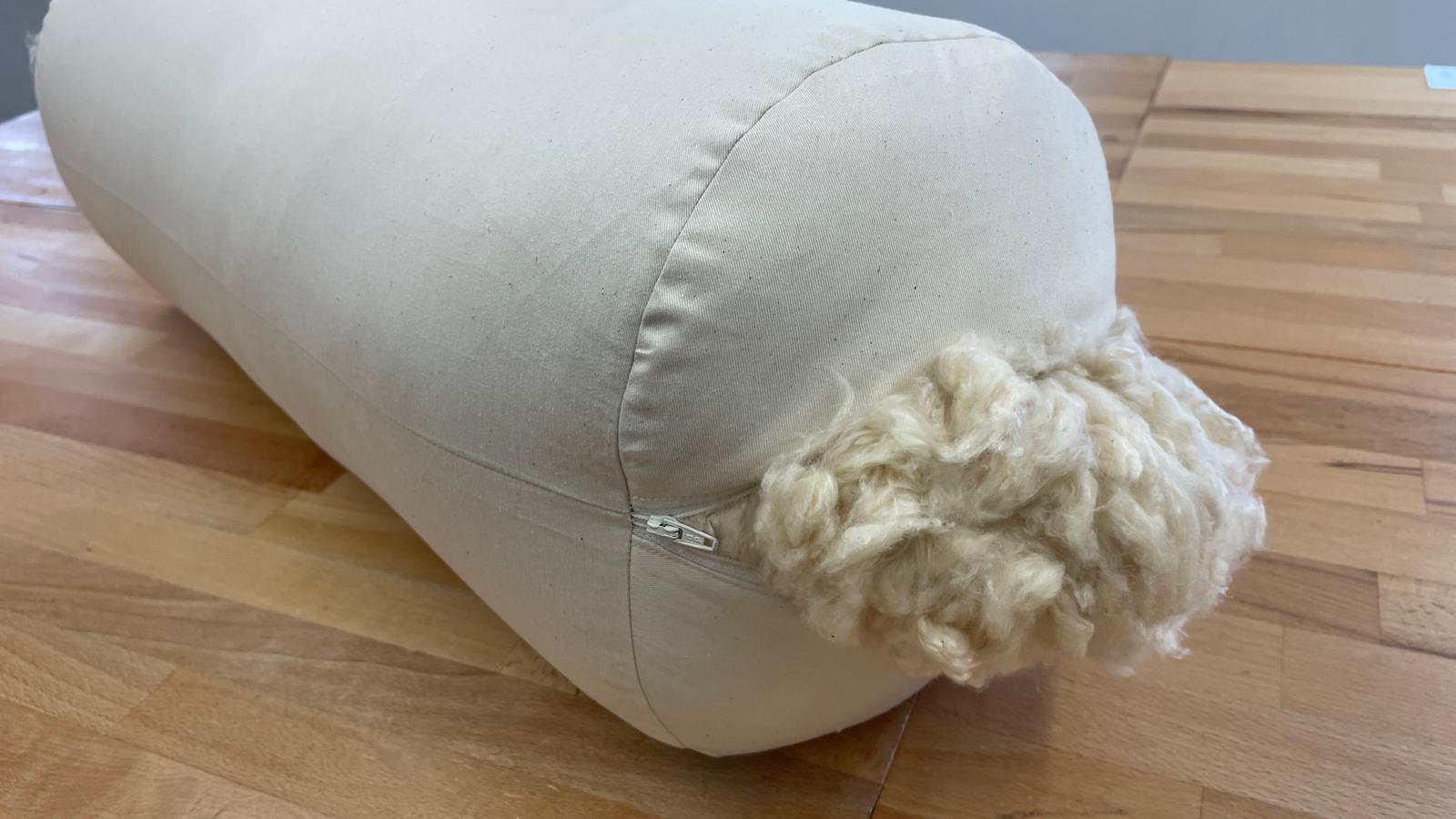
How the filling goes into our bolsters
The kapok filling is applied by machine in an even manner – this is carried out by a family-run business in Baden-Württemberg that specialises in natural fibres. Incidentally, this applies to both bolster ranges in our product range: both our own-brand bolsters and the JivanaProps® bolsters are filled using the same method and by the same company – there is no difference here.
Read more
If you’d like to find out more about our kapok-filled bolsters: take a look at our classic zipped yoga bolster, the drawstring bolster, the oval bolster with a handle or our new additions from JivanaProps – they all feature the same kapok filling but differ in shape and fastening.
Frequently Asked Questions about Kapok
Kapok consists of the fine, silky-soft fibres from the fruit capsules of the kapok tree (Ceiba pentandra). The tree is native to tropical America, but is now mainly cultivated in Asia for fibre production.
We deliberately avoid using general terms such as ‘sustainable’, as they are of little significance without specific certification. What can be said, however, is that kapok does not grow on purpose-built plantations and is harvested without the use of insecticides.
No. Kapok is naturally resistant to pests such as moths, so no additional protection or spraying is required.
Kapok is significantly more dimensionally stable than pure cotton filling and retains its supportive properties well even after frequent use. A round bolster takes a bit of getting used to at first, until the seating surface has settled – alternatively, it can be flattened straight away.
The removable cover is machine washable at 40 °C. The kapok filling itself remains inside the ticking and does not come into contact with water.
Kapok was used in Europe as a filling and padding material right up until the 1950s. Then foam took over this role and kapok fell into obscurity. Today, kapok is mainly used for mattress fillings.